srereview

Get your EKS clusters back on standard support

I’m Diego Delgado, a senior SRE for US software teams on AWS. I upgrade EKS clusters off extended support for a fixed $5,500 per cluster, and I audit Datadog bills with a full refund if the savings I identify are under 3x the fee.

AWS bills a cluster on extended support $0.60 an hour instead of $0.10: about $4,380 more per cluster per year. Sources and AWS dates

Track record

<5 min
Deployment time, down from one hour, after I standardized delivery on GitOps.
EUR 96k
Saved per year by removing a platform component nobody needed.
3
Production SaaS products I run as the sole SRE at a European cloud provider.
10+
Years running production infrastructure as a platform engineer and SRE.

Tools I work with

  • Kubernetes
  • Terraform
  • Terragrunt
  • Flux
  • ArgoCD
  • Helm
  • Kustomize
  • GitLab CI
  • VictoriaMetrics
  • VictoriaLogs
  • OpenTelemetry
  • Prometheus
  • Thanos
  • Grafana
  • AWS
  • Amazon EKS
  • Azure
  • Google Cloud

Services and prices

Three ways to work with me, all remote and priced up front.

  • EKS Upgrade, fixed price

    One cluster taken off extended support with up to four minor-version hops, to the newest version they reach and never lower than 1.35. Each step gets a plan designed to avoid downtime and a rollback. For the scope we agree in writing, if it isn’t on standard support when the work ends, I keep working at no extra cost until it is. What the upgrade covers

    $5,500 per cluster $12,000 for 3 or more clusters

  • Datadog Bill Audit

    Five working days, async, for a Datadog or New Relic bill. Full refund if the annual savings I find are less than three times the fee. How the audit works

    $5,500 fixed $2,900 launch price

  • Monthly SRE retainer

    An upgrade every EKS release so your clusters stay on standard support, alert and SLO hygiene, and review of designs, pull requests and incidents. Month to month.

    $4,000 a month

Other platform work, such as migrations, GitOps, Terraform or CI/CD, is quoted at $85 an hour or a fixed price.

EKS Upgrade, fixed price

Extended support costs six times as much per cluster-hour as standard support.

I move one cluster up to four minor-version hops, to the newest version they reach and never lower than 1.35. The floor is 1.35 because a cluster left on 1.34 is back on the extended rate from December 2, 2026. You know the price before I start. The plan aims to keep your workloads serving traffic.

What the price covers

  • Up to four minor-version hops, to the newest version they reach and never lower than 1.35
  • Control plane, managed node groups and managed add-ons
  • A scan for deprecated APIs, with the fixes made in your manifests and Helm charts
  • Migration off ingress-nginx, when the upgrade needs it
  • A plan designed to avoid downtime, with a rollback for each step
  • A written runbook for your next upgrade

Guarantee. For the scope we agree in writing: if the cluster is not on standard support when the work ends, I keep working at no extra cost until it is.

Per cluster
$5,500
3 or more clusters
$12,000
Book a 30-minute call

On the call we check your versions, add-ons and what runs on the cluster.

Dates on the AWS calendar

  • A cluster on extended support costs $0.60 an hour, against $0.10 on standard support. That is about $4,380 more per cluster per year.
  • EKS 1.31 reaches the end of extended support on November 26, 2026. After that date AWS upgrades the control plane by itself, at a time it doesn’t announce. Node groups and add-ons stay on the old version for you to update.
  • EKS 1.34 reaches the end of standard support on December 2, 2026. With the default upgrade policy, a cluster still on it is billed at the extended rate from that day. Versions 1.32 and 1.33 are already on extended support.
  • EKS 1.35, the lowest version I upgrade to, is on standard support until March 27, 2027. The newest version AWS offers today is EKS 1.37, released October 1, 2026 and on standard support until December 1, 2027.

Prices and dates from Amazon EKS pricing and the EKS Kubernetes release calendar, checked October 24, 2026.

Datadog Bill Audit

Your observability bill shouldn’t grow faster than your product.

In five working days I work out what your Datadog (or New Relic) spend on metrics, logs and traces actually buys, and where it can shrink without losing what you need during an incident. It starts with a 30-minute call to agree the scope, runs async, and ends with written results your team can act on.

Guarantee. If the annual savings I identify are less than three times the fee, I refund the full fee. At $5,500 that means savings below $16,500 a year; at the $2,900 launch price, below $8,700.

Launch price: $2,900 for the first two clients who agree to a published, anonymized case study.

Datadog Bill Audit

Breakdown of what your current spend buys
Included
Cardinality and retention quick wins
Included
Migration plan to open source, where it pays off
Included
Savings estimate in US dollars
Included
Delivery, async
5 working days
Full refund if savings are under
3x the fee
Fixed price
$5,500
First two clients
$2,900

Case studies

Two production platforms I built and ran, with the numbers measured.

How the RESTIA platform fits together Git repository every change is a reviewed pull request Flux applies it Hetzner Cloud Provisioned with Terraform and Terragrunt Production k3s cluster Fixed node poolAutoscaling poolfrom zeroCloudNativePG Test k3s cluster Environment perpull requestMerge releases hereManual promotion OpenTelemetry collector, tail sampling VictoriaMetrics, VictoriaLogs,VictoriaTraces Grafana as code, Sloth SLO alerts Object storage: nightly Postgres backups

RESTIA, restaurant software on Kubernetes

RESTIA sells point of sale, orders and reservations software to restaurants. I designed its platform and run it end to end.

Live restaurant orders need production-grade reliability and full observability, but a small company can’t carry a per-host, per-metric SaaS bill or a dedicated ops team. Every change also has to be tested before it reaches restaurants.

What I built

  • Kubernetes (k3s) on Hetzner Cloud, provisioned with Terraform and Terragrunt: separate production and test clusters, a fixed node pool plus an autoscaling pool that scales from zero.
  • GitOps with Flux: every cluster change is a reviewed pull request, validated in CI with kustomize build and strict schema checks before merge.
  • An ephemeral environment for every backend pull request, created on open and deleted on close. Merging releases to test; production is a deliberate, manual promotion.
  • Self-hosted observability: VictoriaMetrics, VictoriaLogs and VictoriaTraces behind an OpenTelemetry collector with tail sampling (every error trace plus 10% of healthy ones), Grafana dashboards as code, and logs linked to traces.
  • SLO alerting with Sloth: a 99.9% availability SLO on the core sync path pages on error-budget burn instead of noisy thresholds.
  • Postgres on Kubernetes with CloudNativePG, with nightly base backups to object storage.

Results

  • 13 months of production metrics (about 68k active series, 2.3k samples per second) are sized at about 22 GB, projected from the measured 0.26 bytes per sample.
  • The metrics database runs within 2 GiB of RAM and 1 CPU. Observability costs the disks and CPU it runs on, with no per-host, per-series or per-GB fees.
  • Every backend change runs in its own environment before merge, and production releases are explicit.
Production metrics, measured
Active series about 68k
Samples ingested about 2.3k per second
Retention 13 months
Disk for 13 months about 22 GB
Bytes per sample 0.26
Database resources 2 GiB RAM, 1 CPU
The same metrics at Datadog list prices
Infrastructure hosts $75–160
Custom metrics above the allotment $670–3,400
Per month $750–3,500
Per year $9,000–42,000

Inputs: 68,000 series billed as custom metrics; 5–9 billed hosts (5 fixed nodes plus 0–4 autoscaled); metrics only.

A list-price estimate made with my calculator. Datadog doesn’t publish its custom-metric rate: the high end uses the widely cited USD 5 per 100, the low end an assumed USD 1. Some of these series would count as standard Datadog metrics, which would lower the figure.
Bar chart: deployment time fell from 1 hour to under 5 minutes. Deployment time Before 1 hour After under 5 minutes

Sole SRE at a European cloud provider

A European public cloud provider where I am the sole SRE for three production SaaS products. The client stays anonymous.

Three production SaaS products with one SRE, slow and inconsistent deployments, and no shared definition of “reliable” between engineering and product.

What I did

  • Standardized delivery on GitOps with reproducible deployment workflows, and a shared Terraform, Terragrunt and GitOps baseline that three product teams adopted.
  • Defined the SLO/SLI model, the alerting strategy, synthetic monitoring and the Grafana dashboards, on Prometheus and Thanos.
  • Ran major incidents as Incident Commander, led the postmortems, and worked with the Product Owner to trade reliability work against the roadmap.
  • Found and removed a platform component nobody needed, saving EUR 96,400 a year.

Results

  • Deployment time from 1 hour to under 5 minutes.
  • EUR 96,400 a year saved.
  • One SLO model and one IaC and GitOps baseline across three products. I was appointed the organization’s Reliability Working Group ambassador.

Who I work with

A good fit

  • A US software company, Series A to C, without a platform team
  • Production on Amazon EKS, with clusters on extended support or close to it
  • A Datadog or New Relic bill growing faster than the product
  • Upgrades and alert cleanup that keep losing to the product roadmap
  • You want someone senior who owns the work without hand-holding

Not a fit

  • Pre-product startups
  • 24/7 on-call cover
  • On-site-only roles
  • Hiring a permanent employee

Questions

What do you charge? The EKS Upgrade is $5,500 per cluster, or $12,000 for 3 or more clusters. The Datadog Bill Audit is $5,500, or $2,900 for the first two clients who agree to a published, anonymized case study. The monthly SRE retainer is $4,000 a month. Other platform work is $85 an hour or a fixed price.

What does the EKS Upgrade cover? Up to four minor-version hops on one cluster, to the newest version they reach and never lower than 1.35. Today that takes 1.31 to 1.35, 1.32 to 1.36 and 1.33 to 1.37. The price covers the control plane, managed node groups and managed add-ons, deprecated APIs fixed in your manifests and Helm charts, and the move off ingress-nginx when the upgrade needs it. You also get a plan designed to avoid downtime, with a rollback for each step, and a written runbook for the next upgrade.

What if the cluster is still on extended support when you finish? Then I am not finished. For the scope we agree in writing, I keep working at no extra cost until the cluster is on standard support.

My cluster needs more than four hops. Can you still help? Yes. The fixed price covers up to four hops; on the call I look at your versions and quote the rest before any work starts.

How does the Datadog Bill Audit work? It starts with a 30-minute call to agree the scope. Then, over five working days and async, I send you a written breakdown of what your spend buys, the cardinality and retention quick wins, a migration plan to open source where it pays off, and a savings estimate in US dollars. It works the same way for a New Relic bill.

What does the audit guarantee cover? If the annual savings I identify are less than three times the fee, I refund the full fee. That is $16,500 a year at the $5,500 price, or $8,700 at the $2,900 launch price.

What happens after the audit? You keep the written results and can act on them with your own team. If you want me to make the changes, I quote that work separately, at $85 an hour or a fixed price.

How does the monthly retainer work? For $4,000 a month you get an upgrade every EKS release so clusters stay on standard support, alert and SLO hygiene, and review of designs, pull requests and incidents. It runs month to month.

Will a cheaper stack mean less visibility? It shouldn’t. A migration runs the old and new stacks side by side and moves one signal at a time (metrics, logs, traces). The side-by-side run is designed to avoid a gap in visibility.

Why trust a freelancer without client reviews yet? The case studies above are real systems, and RESTIA runs in production today. Both fixed-price offers carry a written guarantee, so a first engagement tests the fit at a known price.

Do you work remotely? Only remotely. I work in English.

Do you cover on-call? No. I don’t offer 24/7 on-call cover.

How do you invoice? I invoice in USD.

About

I’m Diego Delgado, a platform engineer and SRE based in Barcelona. I have spent more than ten years running production infrastructure.

I’m currently the sole SRE for three production SaaS products at a European cloud provider, responsible for their delivery, SLOs, incident command and the platform underneath. I also have strong production experience on AWS, including Amazon EKS.

I also designed, built and run the production platform of RESTIA, a restaurant software company: Kubernetes with Flux, an environment for every pull request, and an observability stack that costs only the machines it runs on.

I work remotely and on my own, so you deal with me from the first call to the last pull request.

With observability I start from the bill: measure what the spend buys, then cut it without losing what you need during an incident.

Diego Delgado Platform engineer and SRE LinkedIn GitHub

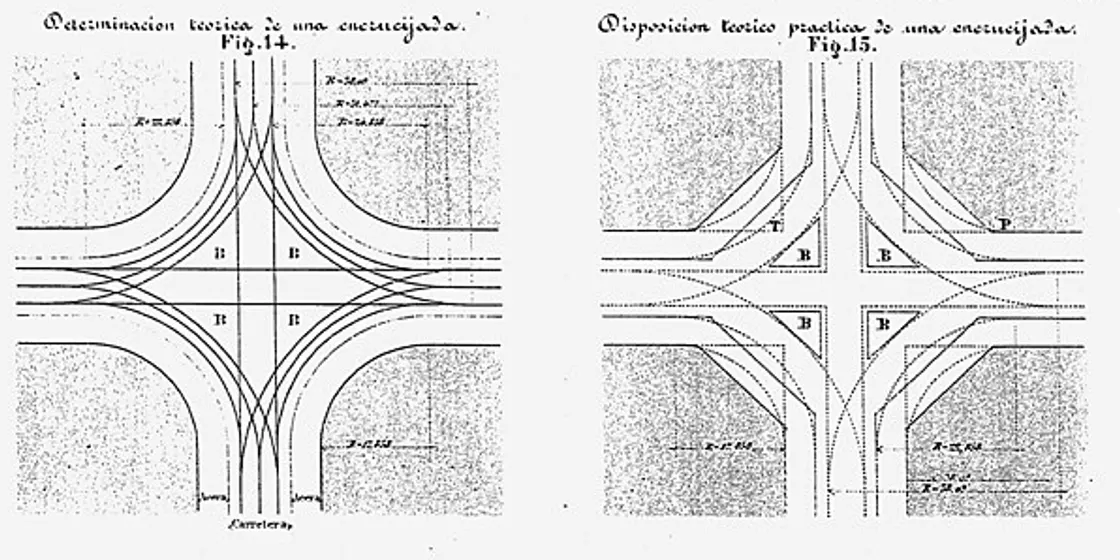
Two street-crossing plans from 1859, showing the cut corners that let traffic turn at each junction of Barcelona’s new grid.
Street crossings studied by Ildefons Cerdà for Barcelona’s Eixample, 1859.

Contact

Send me your EKS versions or your Datadog bill, and I’ll tell you where I would start.

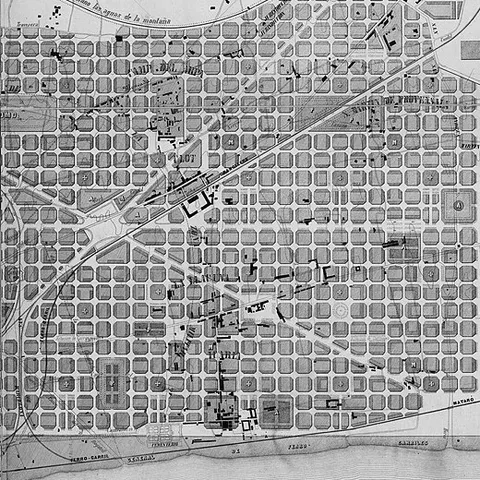
Detail of Ildefons Cerdà’s 1859 plan for Barcelona, showing the grid of the Eixample.
Cerdà’s plan for Barcelona, 1859.